Enterprise AI
AI Strategy
Research
Magnifica Humanitas – The New Social Question of Our Time
Article by
Karl Heinz
·
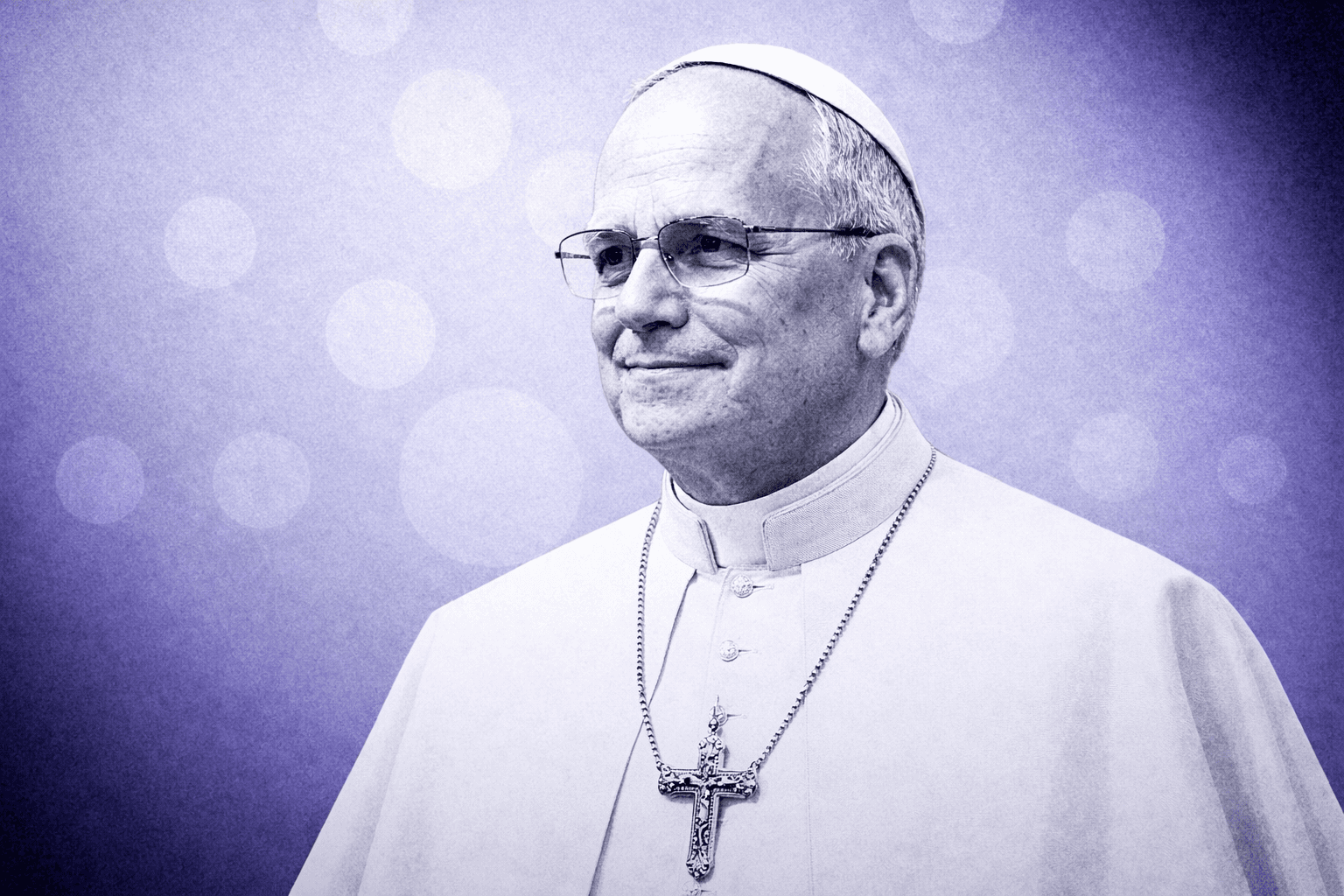
Today, the Vatican publishes the first encyclical of Pope Leo XIV — “Magnifica humanitas”, “Magnificent Humanity”. The Pope deliberately dated it to the 135th anniversary of “Rerum Novarum” — the foundational document with which the Church responded to the Industrial Revolution in 1891 and defended the dignity of workers against the logic of capital.
The message of the date is unmistakable: AI is the new industrial revolution. And the questions it raises are the same — only more radical.
A world in transition — and a Church demanding clarity
“Magnifica humanitas” places the preservation of the human person at the centre — in a world where AI is changing the social, economic, political and ecological conditions of human life at a pace that no generation before has experienced.
Leo XIV does not see AI as a devil or a savior. He sees it for what it is: “A technology that offers “great opportunities, but is also fraught with dangers” — because it raises serious concerns regarding its potential impact on work, democracy, justice and the planet.
Four dimensions of this transformation are at the centre:
1. The social question: Work, dignity, inequality
Digital platforms, algorithmic management and automated systems are displacing certain forms of human labour — just as the steam engine did in 1891. Leo XIV picks up this thread: AI as a question of the workers of our time, as a question of distribution, participation and the protection of those who lose out in the transformation.
The encyclical demands: Technical progress must not lead to the dehumanisation of work. Humans are more than their productivity.
2. The political question: Democracy under pressure
Leo XIV emphasizes that democracy recognises the dignity of every person — and calls on every citizen to participate responsibly. AI threatens exactly that: through disinformation, through algorithmic opinion control, through the concentration of power in a few technology corporations.
“Magnifica humanitas” is a Christian response to digital capitalism — to a logic that puts efficiency before the common good and data before dignity.
3. The economic question: Who benefits — and who pays?
Global challenges such as AI, concentration of wealth, inequality and economic displacement require a global response. Leo XIV connects to the tradition of Catholic social teaching: solidarity, subsidiarity, the common good. Technology that benefits only a few and harms many is not innovation — it is a failure.
4. The ecological question: AI and the planet
“Laudato Si'” and “Magnifica humanitas” together demand that AI is not only measured by what it does to us — but also by what it does to the planet. Data centres, energy consumption, resource extraction for hardware: the ecological dimension of the AI revolution is real — and morally impossible to ignore.
What this has to do with us
“Magnifica humanitas” is not a regulatory manual or a list of prohibited applications. It is an attitude. A demand. An invitation to responsibility — to developers, companies, users and politicians alike.
Leo XIV makes it clear: no sector can manage the challenges of digital innovation alone. Cooperation between institutions and sectors is needed to align digital innovation with the common good. Technology must serve humanity — not replace it.
Responsibility needs more than technology: The Future Advisory Board of neuland.ai AG
The questions AI raises are too big for a single discipline. That is why neuland.ai AG has initiated an interdisciplinary Future Advisory Board — with the clear goal of developing guardrails for a sovereign, innovative and common-good-oriented AI development.
The board consists of 11 scientists from different disciplines, including: Prof. Dr. Jochen Sautermeister, Professor of Moral Theology at the University of Bonn and member of the German Ethics Council, Prof. Dr. Dirk Lanzerath, Director of the German Reference Centre for Ethics in the Life Sciences, and Prof. Dr. Volker Kronenberg, political scientist and Director of CASSIS at the University of Bonn.
This combination of theological, bioethical and political science expertise is no coincidence. It reflects the conviction that “Magnifica humanitas” also formulates: AI is not a purely technical issue. It is a social, ethical and political challenge — and must be accompanied as such. The Future Advisory Board secures exactly this long-term, value-based perspective for neuland.ai: independent, critical and with a view to the common good.
Why an Enterprise AI platform makes the decisive difference
Good intentions are not enough. Anyone who wants to use AI responsibly needs the right infrastructure. The neuland.ai HUB is an agile Enterprise AI Management & Orchestration platform — and delivers exactly what individual AI tools cannot provide:
Central Control & Governance: Attitude, ethics, values and compliance boundaries are defined once and apply to all AI applications across the company — consistent, comprehensible, and enforced.
Data Security & Compliance: Fully GDPR-compliant, end-to-end encrypted, operated exclusively in European data centres. No uncontrolled data sharing, no model training with your data.
Seamless Integration: The platform integrates into existing IT landscapes — from file servers, Wikis, mail servers, SharePoint to internal data sources — (ERP, CRM, PPS, DMS, etc.) without disruptions in processes or security architecture.
Scalability & Efficiency: Once set up, assistants, knowledge bases and workflows are available to the entire company. Changes take effect everywhere immediately — a single point of maintenance for the entire AI landscape.
Human in the Loop: Humans remain the decision-makers. AI supports, suggests, and relieves — but does not take over responsibility that must remain with humans. AI becomes “Collaborative Intelligence”, a tool that helps humans with routine work — not replacing them!
The real question
In 1891, Leo XIII asked: What do we owe the workers of the Industrial Revolution?
In 2026, Leo XIV asks: What do we owe humanity in the age of AI?
The answer is the same — only the urgency is greater.
Technology that does not serve humanity serves nobody. It serves itself.
That is the core of “Magnifica humanitas”. And it is the question that every company, every organisation and every developer must ask themselves — today, not tomorrow. For neuland.ai, it is drive, standard and commitment all in one.
neuland.ai HUB — AI in the service of humanity. Secure. Value-based. European.