Research
AI Strategy
Designing the Operating Model and Organisation

Article by
neuland AI
·
Why an operating model is crucial
A Target Operating Model (TOM) provides a structured approach to operationalising the GenAI strategy. It ensures that the integration of AI technologies is aligned with the company’s strategic objectives – and that use cases move beyond the status of a proof of concept.
Without such a model, even the best pilot projects lack an organisational home. They are carried by individuals, not by structures. This limits scaling and increases the risk of knowledge being lost when key people leave the team.
The three core elements of the TOM
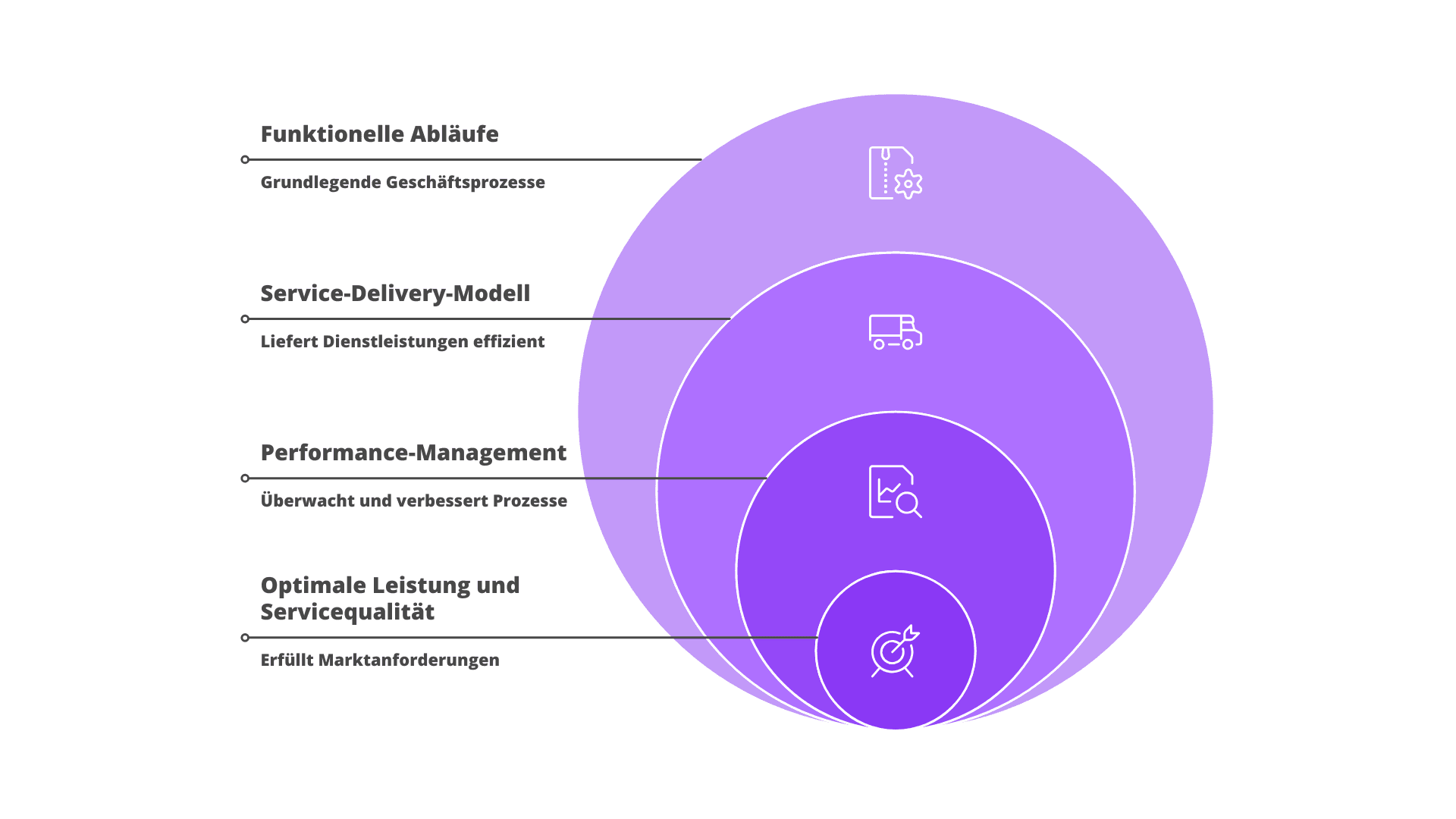
First: defining functional processes. These include the necessary processes for the efficient selection and piloting of use cases, as well as innovation management that systematically introduces new ideas into the organisation.
Second: defining a service delivery model that optimises end-to-end support for GenAI applications. The aim is seamless integration and an increase in growth and customer experiences.
Third: implementing performance management to support continuous improvement. Efficient value tracking validates the business case and makes the value contribution of AI measurable.
Change management: more than training
The successful introduction of AI requires not only technical adjustments, but also a well-thought-out change management concept. GenAI projects trigger stronger fears than classic IT projects – job losses, loss of control, lack of transparency. Taking these concerns seriously is not a luxury, but a prerequisite for acceptance.
Alongside classic methods such as communication and stakeholder management, role-specific training, continuous monitoring and interdisciplinary collaboration are needed. Pilot projects and communities of practice can act as multipliers and significantly increase acceptance.
Building capability: thinking in a differentiated way
A structured needs analysis helps to capture the current state of GenAI skills in the company and identify gaps. Training needs can be differentiated into general fundamentals, solution-specific content and risk awareness. Managers need strategic understanding, specialists detailed application knowledge.
Practical exercises in prompting, critical evaluation of AI outputs and an understanding of the limits of the technology are more important here than theoretical knowledge of model architectures.
Conclusion
A well-designed operating model translates strategy into structure. It defines who is responsible for what, how decisions are made and how the value contribution is measured. The final part of this series is about scaling AI initiatives and sustainable value realisation.