AI Strategy
The box said beef. The answers said Kimi.
The box said beef. The answers said Kimi.

Dr. Anoj Winston Gladius
·
14
Min. Lesezeit
aufsatz
Image: AI generated with neuland.ai HUB
On model provenance, a European food scandal, and the question every enterprise should be asking its AI vendors.

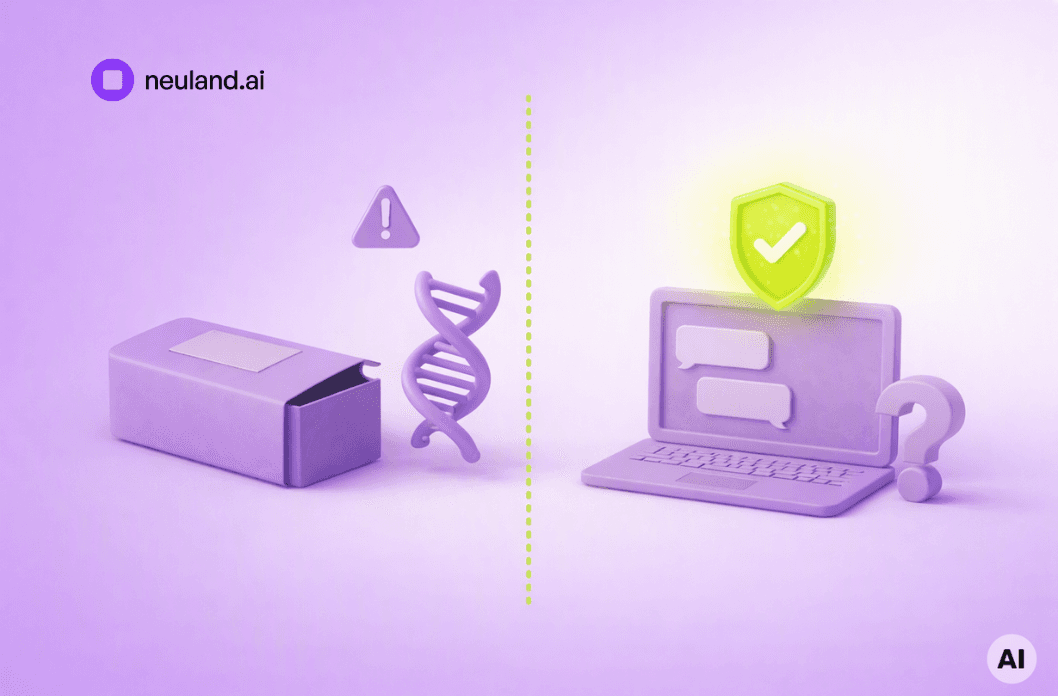
A label, and what was inside. 2013: DNA testing found horse in products labelled beef (note 7). 2026: as alleged in Anthropic's threat report (note 2). Original illustration by neuland.ai.
On 10 September 2026, Anthropic published a 154-page threat report alleging that seven Chinese AI laboratories had been routing their customers' requests through its Claude models to harvest the answers. The most striking case was Moonshot. According to the report, when users of its Kimi assistant asked a question, some of those requests were silently forwarded to Claude, and Claude's answer was shown back to the user as if Kimi had written it - more than 23 million exchanges between May and July, run through thousands of fraudulent accounts. DeepSeek is alleged to have routed 12.1 million exchanges in a single fortnight. Some of the requests reportedly carried police- and military-linked data. Twelve days later, China's own internet regulator summoned all seven companies. The users never knew. Neither, it seems, did the state with the strictest data-localisation rules in the world. Europe has seen this before. In January 2013, Irish food inspectors found horse DNA in burgers sold as beef, and within weeks frozen lasagne carrying a well-known brand turned out to be almost entirely horse. The box said beef. In 2026, the answers said Kimi. Which raises a question very few European enterprises can answer with certainty: which model is actually answering your company?
This piece is about a problem Europe has already solved once, in its food supply: knowing what is actually inside a product that carries someone else's label - and why artificial intelligence currently has no way of telling you.¹
A label is a claim. Provenance is a record. Enterprise AI still runs almost entirely on claims.
What the report says
Anthropic's report, published on 10 September under the title "Detecting and countering misuse of AI", covers activity it detected between December 2025 and August 2026. It names seven China-based laboratories: Alibaba, Moonshot, DeepSeek, Zhipu, MiniMax, Xiaomi and SenseTime. Its central accusation is what the company calls illicit distillation - sending large volumes of requests to Claude in order to use its answers to train competing models. Across all seven, coverage of the report puts the total at around 190 million exchanges.²
Two cases went further than distillation. In Moonshot's case, according to the report, some requests that Kimi's own customers sent were relayed to Claude and Claude's responses displayed back to those customers as Kimi's - in one ten-day window, around 300,000 requests through 5,380 fraudulent accounts that mostly appeared to be located in Singapore and Japan, the large majority sent to Claude's Opus models. Anthropic said it did not know whether Moonshot had told its customers. DeepSeek is alleged to have generated more than 12. 1 million exchanges over fourteen days in July.² And some of the routed requests reportedly contained material linked to Chinese police and military work, including, in one example, a user's request and the video footage attached to it.³
These are allegations, made by a company with an obvious commercial interest in the outcome, and the laboratories had not responded at the time of reporting.² The structural lesson does not depend on every detail being right.
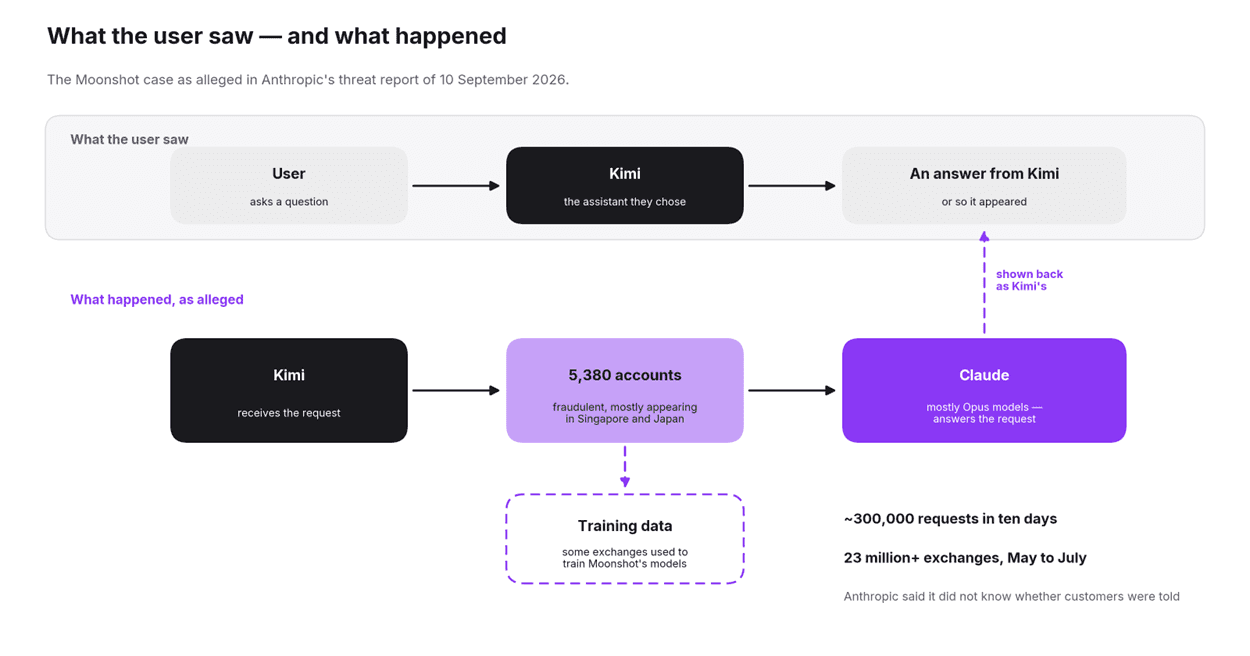
Figure 1. The Moonshot case as alleged in Anthropic's threat report. Original diagram by neuland.ai; sources in note 2.
The country that couldn't see it
China has some of the strictest rules in the world on sending personal data across its borders. Its data-security and personal-information laws require security assessments, approvals or standard contracts before personal data leaves the country.⁴ Its regulator is not short of powers.
And yet the routing was not discovered in Beijing. It was discovered in San Francisco, in the logs of the company receiving the traffic. The sequence is worth reading carefully. On 9 September, the NSA, FBI and CISA published an advisory naming six Chinese AI firms. On 10 September, China rejected that advisory as unfounded - on the same day Anthropic's report appeared. On 22 September, the Cyberspace Administration of China summoned representatives of all seven companies the report named, before narrowing its inquiry to DeepSeek and Moonshot.⁵ Washington, for its part, has since barred DeepSeek from civilian federal agencies, treating it as a supply-chain risk.⁶
The most powerful data regulator in the world learned where its own citizens' requests had gone from a foreign company's threat report. That is the point to hold on to. Whoever holds the logs knows the truth. Everyone else holds a label.
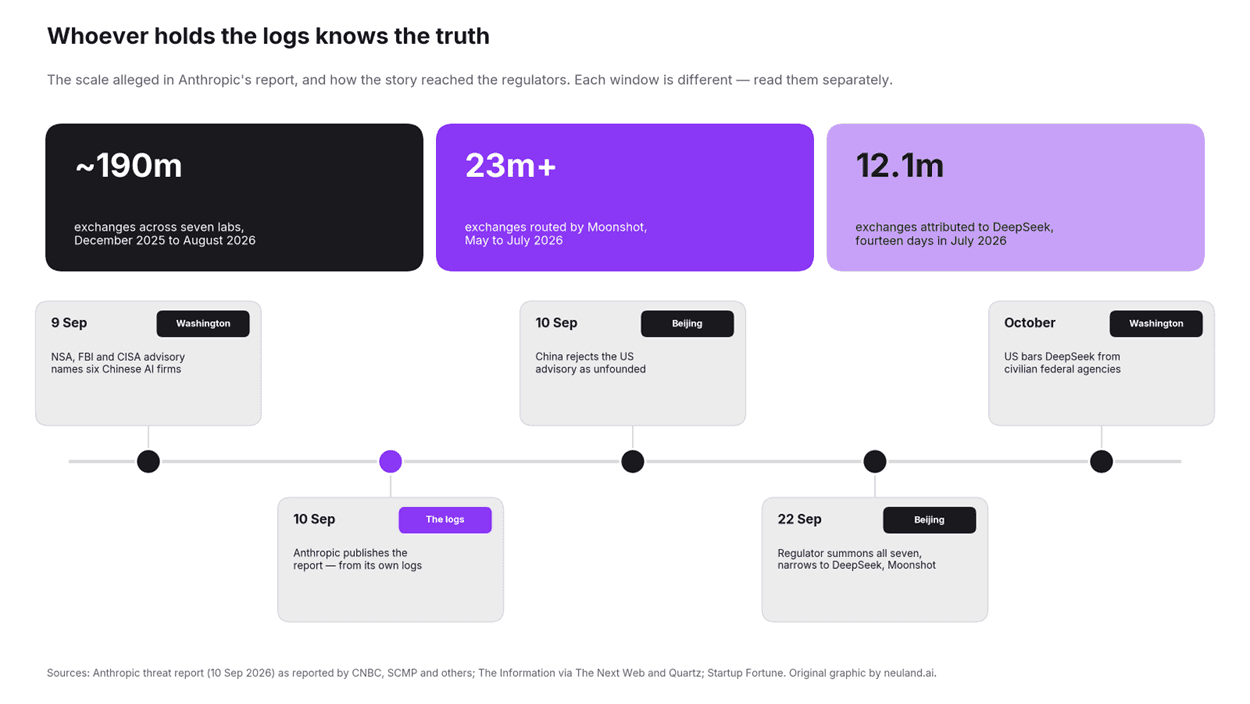
Figure 2. The scale alleged, and how the story reached the regulators. Original graphic by neuland.ai; sources in notes 2, 5 and 6.
2013: the box said beef
In December 2012, the Food Safety Authority of Ireland tested a range of frozen foods as part of its routine monitoring and found DNA it could not identify. It tested the samples again, this time for cow, pig and horse. On 15 January 2013 it announced the results: more than a third of the beef products tested contained horse DNA, and in one supermarket's value burgers horse made up around 29 percent of the meat. Within weeks, frozen beef lasagne sold under the Findus brand, made by the French manufacturer Comigel, turned out to contain between 80 and 100 percent horse.⁷
The meat had travelled. According to the French authorities, Romanian abattoirs and Dutch and Cypriot traders were part of the chain that ended with horse labelled as beef, passing through a meat processor and a frozen-food manufacturer before it reached the brands on the box.7 Most of the retailers selling those products had no idea. And one detail matters more than any other here: until then, supermarkets and inspectors had not been testing beef for horse, because nobody expected it to be there.⁷
Europe's response was not to ask consumers to trust the brands more. The Commission launched an EU-wide DNA testing programme, and the industry learned to test what was inside its own supply chains rather than rely on the label from the supplier one step up.⁷ Traceability stopped being something people assumed and became something they could prove.
Every answer is unmarked
An answer from an AI system is the frozen lasagne of 2026: a branded box over a supply chain nobody downstream can see. It carries no origin mark. A paragraph from Kimi and a paragraph from Claude look the same on the screen. So does a paragraph from a European "sovereign" assistant that calls an American model in the background, which the previous pieces in this series called a European storefront.⁸ The user sees a brand. The model behind it is invisible unless somebody chooses to disclose it.
Provenance is not undetectable. AI has its own DNA tests: in August, developers identified an anonymous model on a public platform by fingerprinting its tokenizer, matching it to the GLM family before Z.ai confirmed it.⁹ Anthropic identified the Kimi routing from patterns in accounts, proxies and traffic. But both detections were made by people who could see the traffic. The enterprise customer of a wrapper cannot - and, like the supermarkets in 2012, most are not even testing, because nobody expects a substitution.
For an enterprise, the consequences are concrete.
Data path: your request, and whatever documents came with it, went somewhere you did not choose.
Evaluation: you tested one model and are being served another.
Continuity: when Anthropic shut down the accounts, the service behind the Kimi label changed overnight, and its users had no way of knowing why.
Training: whether your exchanges are used to train models depends on the plan and the provider, as the previous piece set out - and you cannot check a provider you do not know is involved.¹⁰
Accountability: if an auditor asks which model produced a decision six months ago, "the one on the label" is not an answer.
Routing is not the problem - hidden routing is
It would be easy to draw the wrong lesson from this. Sending a hard question to a stronger model is good engineering. We do it ourselves, and so does every serious AI platform. The person who wrote the Kimi routing may well have been making a pragmatic decision to keep customers happy while their own model caught up.
The difference is not whether routing happens. It is three questions: who decides, who knows, and who can prove it afterwards. In Moonshot's case, according to the report, the vendor decided, the customer did not know, and nobody outside could prove anything until a third party published its logs. In a governed system, the customer's policy decides, the routing is visible, every request is recorded with the model that handled it, and certain data never leaves models running on the customer's own infrastructure.
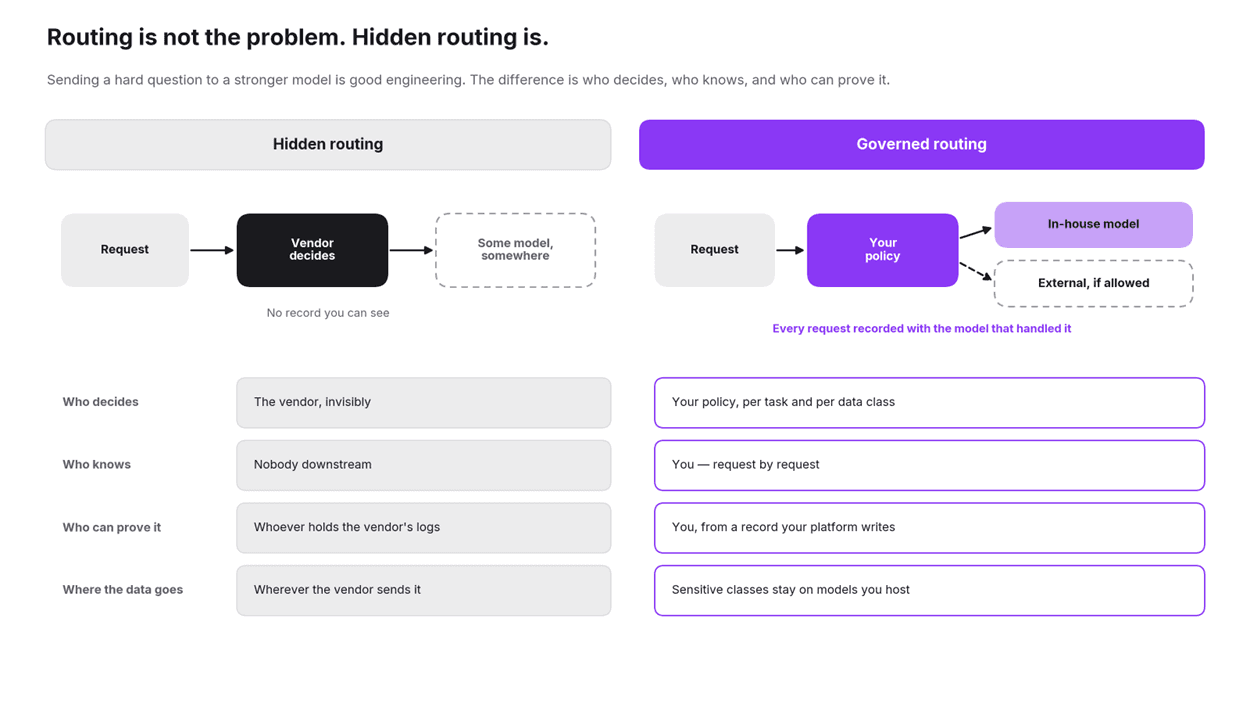
Figure 3. Hidden routing and governed routing. Original diagram by neuland.ai.
The model provenance check
Tick each statement that is true for your organisation today. In Word, click the box to tick it:
✓ | Statement | Layer |
☐ | 1. Our AI vendors tell us in writing which model answers our requests by default. | Disclosure |
☐ | 2. We are told before a vendor changes, adds or falls back to another model. | Disclosure |
☐ | 3. We know whether our exchanges are used for training, on every plan our staff use. | Disclosure |
☐ | 4. Every request is recorded with the model, version and location that processed it. | Record |
☐ | 5. That record is written by a platform we control, not only by the vendor. | Record |
☐ | 6. We could show an auditor which model produced a given answer six months ago. | Record |
☐ | 7. Sensitive data classes are pinned to models running on our own infrastructure. | Control |
☐ | 8. No request leaves our infrastructure unless our policy allows it. | Control |
☐ | 9. We evaluated the model we are actually served, not only the one in the sales presentation. | Control |
☐ | 10. We have tested what our AI does if an upstream model is suspended. | Control |
Your score:
8–10 ticks | Your answers carry their origin. You could prove which model produced any of them. |
4–7 ticks | Some of your answers come from models you did not choose. Start with the record — it is the one thing a vendor cannot give you after the fact. |
0–3 ticks | You are trusting a label. |
What this means for European enterprises
In Europe, hidden routing is not only a matter of good practice. Under the GDPR, a processor may not engage another processor without the controller's prior written authorisation, and transfers of personal data outside the European Economic Area are subject to their own rules.¹¹ An AI vendor that quietly forwards requests containing personal data to a different model provider is, in effect, adding a sub-processor its customer never approved. The horsemeat chain is a fair picture of what that looks like at scale: each link passing the product on, none of them answerable to the customer at the end. Most European data protection officers would want to know about such a chain before it exists, not from a threat report.
The practical response is the 2013 one, applied to answers instead of lasagne. Do not rely on the label. Test what is inside. Require the origin to be stated - which model, which version, where it ran - and recorded, request by request, by a platform you control rather than by the vendor alone. For data that must not leave the building, pin it to models running on your own hardware. Open weights on your own servers cannot forward a request anywhere. That is the point of them.
Where neuland.ai stands on this
The neuland.ai HUB routes work between models - and that is exactly why it records the routing. Each task is routed under the customer's own policy, across open-weight models hosted in house, such as Mistral, Nemotron, GLM, Qwen and DeepSeek, and proprietary models such as Claude and GPT where the customer allows them. Every request is recorded with the model that handled it, alongside the retrievals, tool calls and decisions around it, in a record the customer owns. Data classes can be pinned to models running on the customer's own infrastructure, and calling an external model is a policy decision the customer makes, not a default the platform makes for them.¹²
This is also the answer to a question we hear from data protection officers more and more often: can you tell us which model produced a given answer? Yes - request by request, and six months later.
Personal take
A word on fairness. The facts at the centre of this piece are allegations by one company against several of its competitors, at a time when that company has every reason to make its case loudly. The laboratories named had not responded when the report appeared, and China has rejected the American advisory published the day before. None of that is settled, and this piece does not try to settle it.
What I am pushing back against is something that does not depend on who is right: the habit of treating an AI product's brand as evidence of what is inside it. In 2013, Europe learned the expensive way that a label on a box is a claim, not a record, and that the only reliable answer is to test what is inside and trace where it came from. Enterprise AI has not yet learned that lesson. Until regulators get there, every company can do it for itself.
We at neuland.ai would rather stamp every answer with the model that produced it than ask our customers to trust the label.
[1] Series articles available at https://neuland.ai/en/resources/insights.
[2] Anthropic, "Detecting and countering misuse of AI", threat intelligence report, 10 September 2026, covering December 2025 to August 2026; reported by CNBC (11 September 2026), the South China Morning Post (11 September 2026) and Better Stack (14 September 2026). Total of around 190 million exchanges across the seven laboratories as reported in coverage of the report.
[3] Startup Fortune and Quartz, September 2026, on routed requests reportedly containing police- and military-linked material, including a user request with attached footage.
[4] People's Republic of China, Personal Information Protection Law (2021) and Data Security Law (2021), including the rules governing cross-border transfers of personal information.
[5] The Information, as reported by The Next Web, Quartz and AI Weekly, 22-23 September 2026, on the Cyberspace Administration of China summoning all seven companies and narrowing its inquiry to DeepSeek and Moonshot; The Next Web on the NSA, FBI and CISA advisory of 9 September 2026 and China's rejection of it on 10 September 2026.
[6] Startup Fortune, October 2026, on the US Department of Homeland Security barring DeepSeek from civilian federal agencies and government contracts as a supply-chain risk.
[7] On the 2013 horse meat scandal: European Commission, "Horse meat - questions and answers", on the findings by Irish inspectors in January 2013, Findus UK beef lasagne supplied by Comigel containing 80 to 100 percent horse meat, and the EU coordinated testing programme; https://en.wikipedia.org/wiki/2013_horse_meat_scandal, on the FSAI results announced on 15 January 2013; NBC News, February 2013, on the French authorities' account of Romanian abattoirs and Dutch and Cypriot traders in the supply chain; REHIS, "Horse meat scandal - a decade on" (2023), on the absence of testing for horse in beef before 2013 and the EU-wide DNA testing programme.
[8] See the earlier piece in this series on the AI capital web and European storefronts for American models.
[9] See the earlier piece in this series on blind evaluation and the anonymous Ox Alpha model.
[10] See the earlier piece in this series on the AI capital web, including the training defaults of consumer and enterprise AI plans.
[11] Regulation (EU) 2016/679 (GDPR), Article 28(2), on the engagement of another processor only with the controller's prior specific or general written authorisation, and Chapter V on transfers of personal data to third countries.
[12] neuland.ai HUB: per-task model routing under customer-set policy across self-hosted open-weight and proprietary models; request-level record of the model used, alongside retrievals, tool calls and decisions, in an append-only audit owned by the customer; data classes pinned to models on customer infrastructure; deployment on premises, in a European sovereign cloud or air-gapped. neuland.ai AG retains responsibility for content quality and clean delivery of results across all customer engagements.
On model provenance, a European food scandal, and the question every enterprise should be asking its AI vendors.
A label, and what was inside. 2013: DNA testing found horse in products labelled beef (note 7). 2026: as alleged in Anthropic's threat report (note 2). Original illustration by neuland.ai.
On 10 September 2026, Anthropic published a 154-page threat report alleging that seven Chinese AI laboratories had been routing their customers' requests through its Claude models to harvest the answers. The most striking case was Moonshot. According to the report, when users of its Kimi assistant asked a question, some of those requests were silently forwarded to Claude, and Claude's answer was shown back to the user as if Kimi had written it - more than 23 million exchanges between May and July, run through thousands of fraudulent accounts. DeepSeek is alleged to have routed 12.1 million exchanges in a single fortnight. Some of the requests reportedly carried police- and military-linked data. Twelve days later, China's own internet regulator summoned all seven companies. The users never knew. Neither, it seems, did the state with the strictest data-localisation rules in the world. Europe has seen this before. In January 2013, Irish food inspectors found horse DNA in burgers sold as beef, and within weeks frozen lasagne carrying a well-known brand turned out to be almost entirely horse. The box said beef. In 2026, the answers said Kimi. Which raises a question very few European enterprises can answer with certainty: which model is actually answering your company?
This piece is about a problem Europe has already solved once, in its food supply: knowing what is actually inside a product that carries someone else's label - and why artificial intelligence currently has no way of telling you.¹
A label is a claim. Provenance is a record. Enterprise AI still runs almost entirely on claims.
What the report says
Anthropic's report, published on 10 September under the title "Detecting and countering misuse of AI", covers activity it detected between December 2025 and August 2026. It names seven China-based laboratories: Alibaba, Moonshot, DeepSeek, Zhipu, MiniMax, Xiaomi and SenseTime. Its central accusation is what the company calls illicit distillation - sending large volumes of requests to Claude in order to use its answers to train competing models. Across all seven, coverage of the report puts the total at around 190 million exchanges.²
Two cases went further than distillation. In Moonshot's case, according to the report, some requests that Kimi's own customers sent were relayed to Claude and Claude's responses displayed back to those customers as Kimi's - in one ten-day window, around 300,000 requests through 5,380 fraudulent accounts that mostly appeared to be located in Singapore and Japan, the large majority sent to Claude's Opus models. Anthropic said it did not know whether Moonshot had told its customers. DeepSeek is alleged to have generated more than 12. 1 million exchanges over fourteen days in July.² And some of the routed requests reportedly contained material linked to Chinese police and military work, including, in one example, a user's request and the video footage attached to it.³
These are allegations, made by a company with an obvious commercial interest in the outcome, and the laboratories had not responded at the time of reporting.² The structural lesson does not depend on every detail being right.
Figure 1. The Moonshot case as alleged in Anthropic's threat report. Original diagram by neuland.ai; sources in note 2.
The country that couldn't see it
China has some of the strictest rules in the world on sending personal data across its borders. Its data-security and personal-information laws require security assessments, approvals or standard contracts before personal data leaves the country.⁴ Its regulator is not short of powers.
And yet the routing was not discovered in Beijing. It was discovered in San Francisco, in the logs of the company receiving the traffic. The sequence is worth reading carefully. On 9 September, the NSA, FBI and CISA published an advisory naming six Chinese AI firms. On 10 September, China rejected that advisory as unfounded - on the same day Anthropic's report appeared. On 22 September, the Cyberspace Administration of China summoned representatives of all seven companies the report named, before narrowing its inquiry to DeepSeek and Moonshot.⁵ Washington, for its part, has since barred DeepSeek from civilian federal agencies, treating it as a supply-chain risk.⁶
The most powerful data regulator in the world learned where its own citizens' requests had gone from a foreign company's threat report. That is the point to hold on to. Whoever holds the logs knows the truth. Everyone else holds a label.
Figure 2. The scale alleged, and how the story reached the regulators. Original graphic by neuland.ai; sources in notes 2, 5 and 6.
2013: the box said beef
In December 2012, the Food Safety Authority of Ireland tested a range of frozen foods as part of its routine monitoring and found DNA it could not identify. It tested the samples again, this time for cow, pig and horse. On 15 January 2013 it announced the results: more than a third of the beef products tested contained horse DNA, and in one supermarket's value burgers horse made up around 29 percent of the meat. Within weeks, frozen beef lasagne sold under the Findus brand, made by the French manufacturer Comigel, turned out to contain between 80 and 100 percent horse.⁷
The meat had travelled. According to the French authorities, Romanian abattoirs and Dutch and Cypriot traders were part of the chain that ended with horse labelled as beef, passing through a meat processor and a frozen-food manufacturer before it reached the brands on the box.7 Most of the retailers selling those products had no idea. And one detail matters more than any other here: until then, supermarkets and inspectors had not been testing beef for horse, because nobody expected it to be there.⁷
Europe's response was not to ask consumers to trust the brands more. The Commission launched an EU-wide DNA testing programme, and the industry learned to test what was inside its own supply chains rather than rely on the label from the supplier one step up.⁷ Traceability stopped being something people assumed and became something they could prove.
Every answer is unmarked
An answer from an AI system is the frozen lasagne of 2026: a branded box over a supply chain nobody downstream can see. It carries no origin mark. A paragraph from Kimi and a paragraph from Claude look the same on the screen. So does a paragraph from a European "sovereign" assistant that calls an American model in the background, which the previous pieces in this series called a European storefront.⁸ The user sees a brand. The model behind it is invisible unless somebody chooses to disclose it.
Provenance is not undetectable. AI has its own DNA tests: in August, developers identified an anonymous model on a public platform by fingerprinting its tokenizer, matching it to the GLM family before Z.ai confirmed it.⁹ Anthropic identified the Kimi routing from patterns in accounts, proxies and traffic. But both detections were made by people who could see the traffic. The enterprise customer of a wrapper cannot - and, like the supermarkets in 2012, most are not even testing, because nobody expects a substitution.
For an enterprise, the consequences are concrete.
Data path: your request, and whatever documents came with it, went somewhere you did not choose.
Evaluation: you tested one model and are being served another.
Continuity: when Anthropic shut down the accounts, the service behind the Kimi label changed overnight, and its users had no way of knowing why.
Training: whether your exchanges are used to train models depends on the plan and the provider, as the previous piece set out - and you cannot check a provider you do not know is involved.¹⁰
Accountability: if an auditor asks which model produced a decision six months ago, "the one on the label" is not an answer.
Routing is not the problem - hidden routing is
It would be easy to draw the wrong lesson from this. Sending a hard question to a stronger model is good engineering. We do it ourselves, and so does every serious AI platform. The person who wrote the Kimi routing may well have been making a pragmatic decision to keep customers happy while their own model caught up.
The difference is not whether routing happens. It is three questions: who decides, who knows, and who can prove it afterwards. In Moonshot's case, according to the report, the vendor decided, the customer did not know, and nobody outside could prove anything until a third party published its logs. In a governed system, the customer's policy decides, the routing is visible, every request is recorded with the model that handled it, and certain data never leaves models running on the customer's own infrastructure.
Figure 3. Hidden routing and governed routing. Original diagram by neuland.ai.
The model provenance check
Tick each statement that is true for your organisation today. In Word, click the box to tick it:
✓ | Statement | Layer |
☐ | 1. Our AI vendors tell us in writing which model answers our requests by default. | Disclosure |
☐ | 2. We are told before a vendor changes, adds or falls back to another model. | Disclosure |
☐ | 3. We know whether our exchanges are used for training, on every plan our staff use. | Disclosure |
☐ | 4. Every request is recorded with the model, version and location that processed it. | Record |
☐ | 5. That record is written by a platform we control, not only by the vendor. | Record |
☐ | 6. We could show an auditor which model produced a given answer six months ago. | Record |
☐ | 7. Sensitive data classes are pinned to models running on our own infrastructure. | Control |
☐ | 8. No request leaves our infrastructure unless our policy allows it. | Control |
☐ | 9. We evaluated the model we are actually served, not only the one in the sales presentation. | Control |
☐ | 10. We have tested what our AI does if an upstream model is suspended. | Control |
Your score:
8–10 ticks | Your answers carry their origin. You could prove which model produced any of them. |
4–7 ticks | Some of your answers come from models you did not choose. Start with the record — it is the one thing a vendor cannot give you after the fact. |
0–3 ticks | You are trusting a label. |
What this means for European enterprises
In Europe, hidden routing is not only a matter of good practice. Under the GDPR, a processor may not engage another processor without the controller's prior written authorisation, and transfers of personal data outside the European Economic Area are subject to their own rules.¹¹ An AI vendor that quietly forwards requests containing personal data to a different model provider is, in effect, adding a sub-processor its customer never approved. The horsemeat chain is a fair picture of what that looks like at scale: each link passing the product on, none of them answerable to the customer at the end. Most European data protection officers would want to know about such a chain before it exists, not from a threat report.
The practical response is the 2013 one, applied to answers instead of lasagne. Do not rely on the label. Test what is inside. Require the origin to be stated - which model, which version, where it ran - and recorded, request by request, by a platform you control rather than by the vendor alone. For data that must not leave the building, pin it to models running on your own hardware. Open weights on your own servers cannot forward a request anywhere. That is the point of them.
Where neuland.ai stands on this
The neuland.ai HUB routes work between models - and that is exactly why it records the routing. Each task is routed under the customer's own policy, across open-weight models hosted in house, such as Mistral, Nemotron, GLM, Qwen and DeepSeek, and proprietary models such as Claude and GPT where the customer allows them. Every request is recorded with the model that handled it, alongside the retrievals, tool calls and decisions around it, in a record the customer owns. Data classes can be pinned to models running on the customer's own infrastructure, and calling an external model is a policy decision the customer makes, not a default the platform makes for them.¹²
This is also the answer to a question we hear from data protection officers more and more often: can you tell us which model produced a given answer? Yes - request by request, and six months later.
Personal take
A word on fairness. The facts at the centre of this piece are allegations by one company against several of its competitors, at a time when that company has every reason to make its case loudly. The laboratories named had not responded when the report appeared, and China has rejected the American advisory published the day before. None of that is settled, and this piece does not try to settle it.
What I am pushing back against is something that does not depend on who is right: the habit of treating an AI product's brand as evidence of what is inside it. In 2013, Europe learned the expensive way that a label on a box is a claim, not a record, and that the only reliable answer is to test what is inside and trace where it came from. Enterprise AI has not yet learned that lesson. Until regulators get there, every company can do it for itself.
We at neuland.ai would rather stamp every answer with the model that produced it than ask our customers to trust the label.
[1] Series articles available at https://neuland.ai/en/resources/insights.
[2] Anthropic, "Detecting and countering misuse of AI", threat intelligence report, 10 September 2026, covering December 2025 to August 2026; reported by CNBC (11 September 2026), the South China Morning Post (11 September 2026) and Better Stack (14 September 2026). Total of around 190 million exchanges across the seven laboratories as reported in coverage of the report.
[3] Startup Fortune and Quartz, September 2026, on routed requests reportedly containing police- and military-linked material, including a user request with attached footage.
[4] People's Republic of China, Personal Information Protection Law (2021) and Data Security Law (2021), including the rules governing cross-border transfers of personal information.
[5] The Information, as reported by The Next Web, Quartz and AI Weekly, 22-23 September 2026, on the Cyberspace Administration of China summoning all seven companies and narrowing its inquiry to DeepSeek and Moonshot; The Next Web on the NSA, FBI and CISA advisory of 9 September 2026 and China's rejection of it on 10 September 2026.
[6] Startup Fortune, October 2026, on the US Department of Homeland Security barring DeepSeek from civilian federal agencies and government contracts as a supply-chain risk.
[7] On the 2013 horse meat scandal: European Commission, "Horse meat - questions and answers", on the findings by Irish inspectors in January 2013, Findus UK beef lasagne supplied by Comigel containing 80 to 100 percent horse meat, and the EU coordinated testing programme; https://en.wikipedia.org/wiki/2013_horse_meat_scandal, on the FSAI results announced on 15 January 2013; NBC News, February 2013, on the French authorities' account of Romanian abattoirs and Dutch and Cypriot traders in the supply chain; REHIS, "Horse meat scandal - a decade on" (2023), on the absence of testing for horse in beef before 2013 and the EU-wide DNA testing programme.
[8] See the earlier piece in this series on the AI capital web and European storefronts for American models.
[9] See the earlier piece in this series on blind evaluation and the anonymous Ox Alpha model.
[10] See the earlier piece in this series on the AI capital web, including the training defaults of consumer and enterprise AI plans.
[11] Regulation (EU) 2016/679 (GDPR), Article 28(2), on the engagement of another processor only with the controller's prior specific or general written authorisation, and Chapter V on transfers of personal data to third countries.
[12] neuland.ai HUB: per-task model routing under customer-set policy across self-hosted open-weight and proprietary models; request-level record of the model used, alongside retrievals, tool calls and decisions, in an append-only audit owned by the customer; data classes pinned to models on customer infrastructure; deployment on premises, in a European sovereign cloud or air-gapped. neuland.ai AG retains responsibility for content quality and clean delivery of results across all customer engagements.